
How to Choose Dual Occupancy Plans That Work for Your Block in Melbourne
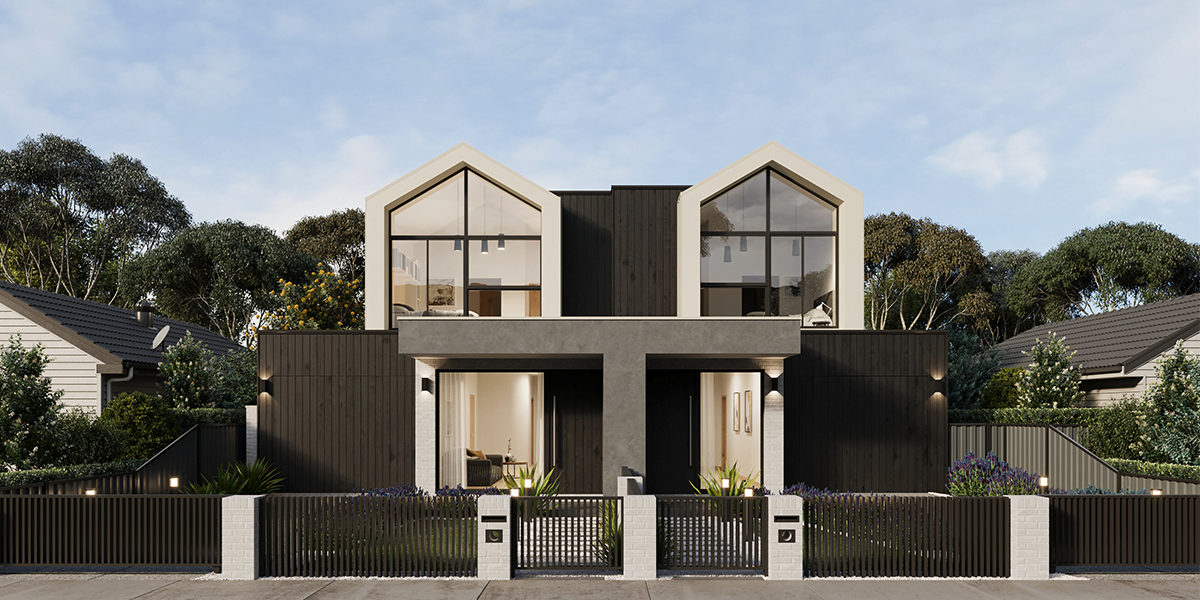
As a property owner or investor in Melbourne, one of the biggest decisions you'll have to make is to determine the type of dual occupancy plans you should consider for your block. If you do this right, you open two streams of income, enhanced capital growth and a home that earns for you. If you get it wrong, you could be faced with expensive redesigns, council rejections and the delayed returns.
Here are some things you should consider when assessing the suitability of dual occupancy plans for your block in Melbourne, including site restrictions and zoning rules, layout options and council regulations.
What Makes a Dual Occupancy Plan Work for Your Block?
Not all blocks will be appropriate for a dual occupancy plan. What works great on a wide flat 600sqm lot in the General Residential Zone will not necessarily work on a narrow sloping block in a Neighbourhood Residential Zone. The first thing to consider is your land, its size, shape, orientation, slope and zone that it is located within.
Before you consider looking at a floor plan, you should start by determining your land's frontage width, the land zone you're in, whether there are any overlays over your land, and the steepness of the slope. For most Melbourne councils, there are basic requirements regarding minimum frontage for dual occupation, and it's knowing these basics before committing to a design that will help your project pass council.
Understanding the Types of Dual Occupancy Floor Plans
Once you know what your block allows, the next step is understanding which layout suits it best. Dual occupancy floor plans generally fall into four main configurations, and each one suits a different type of block.
Side-by-Side Duplex
Two houses side by side with a common wall. This is the most widely used layout in Melbourne and is suitable for blocks that are wider (e.g. 14m to 16m frontage). Individual homes have their own streets, entrance and outdoor area. Side-by-side layouts are also favored amongst investors because both houses appear equivalent in size and quality and will be simpler to rent or sell after subdivision.
Tandem (Front and Back) Layout
One dwelling at the front of the block, one at the rear. This configuration suits narrower blocks where a side-by-side design simply does not fit. The rear dwelling is accessed via a shared driveway or dedicated laneway. Tandem layouts are widely used across Melbourne's middle ring suburbs where blocks tend to be long and narrow. The key design challenge is ensuring the rear dwelling gets adequate natural light and private open space.
Detached Dual Occupancy
Two completely separate, standalone homes on the same title with no shared walls. This layout offers maximum privacy and independence for occupants. It works best on larger blocks and is a strong choice for families wanting to house extended relatives while maintaining genuine separation between the two dwellings.
Split-Level Design
Split level dual occupancy schemes are planned on sloping blocks to take advantage of the natural topography to provide separation between the two dwellings. When executed properly, these designs are aesthetically pleasing and extremely practical. They can't be done by an average designer, as mistakes can be very expensive and hard to rectify once built.
What to Look for in Dual Occupancy House Plans
When reviewing dual occupancy house plans, most people focus on how the homes look. But what determines whether a project succeeds goes much deeper than aesthetics.
Private open space is one of the first things to evaluate. Every dwelling needs a minimum area of private open space, typically 40sqm with a minimum dimension of 3 metres in Melbourne. Plans that try to squeeze this down to the bare minimum often create dwellings that feel cramped and are harder to rent or sell. Good plans treat outdoor space as a genuine feature of the home, not just a compliance requirement.
Even more important are the separate entrances and the privacy between the two houses. Every home needs to feel truly separate – no overlooking between dwellings and landscaping or fencing that has been thought about to give a real sense of separation. Tenants and buyers pay a premium for privacy and it is worth prioritising from the very start of the design process.
Car parking is another area where plans can fall down if not thought about early. Most Melbourne councils require at least one car space per dwelling and some zones require two. Driveways and parking take up more of the block than you might think and good dual occupancy plans take this into account from day one rather than trying to squeeze parking in as an afterthought.
Natural light and orientation round out the key things to assess. Both dwellings should receive adequate sunlight and cross ventilation. Plans that orient living areas to the north will result in homes that are more comfortable, more energy efficient, and more attractive to tenants, all of which directly supports your rental yield and long-term returns.
Melbourne Zoning and What It Means for Your Plans
Melbourne's residential zones directly determine what dual occupancy plans are achievable on your block, and understanding the main zones is essential before committing to any design.
The General Residential Zone covers the majority of Melbourne's established suburbs and is the most flexible zone for dual occupancy. It permits two dwellings on a lot with a standard planning permit and a building height generally capped at 9 metres. This is where most dual occupancy projects across Melbourne are built.
The Neighbourhood Residential Zone is used in locations where councils have identified the need to protect the character of the neighbourhood. It usually restricts development to two units per lot, and has more stringent height and setback restrictions. Dual occupancy is still possible here but requires a more considered design and a thorough planning application to get over the line.
The Residential Growth Zone is the most permissive, located near train stations and activity centres. It supports higher density development and most RGZ sites have the capacity for townhouse or apartment projects that can deliver stronger returns than a straightforward dual occupancy. Always check your specific council schedule as well — individual councils apply their own variations to these zones, and those differences can significantly affect what gets approved.
The Xpress Building Design Approach to Dual Occupancy Plans
At Xpress Building Design, we have been developing dual occupancy plans for Melbourne property owners and investors for over 20 years. Every project starts with a free site evaluation so you know exactly what is achievable before committing to anything. We handle everything from initial sketch through to building permit — one experienced team, start to finish.
Conclusion
Choosing dual occupancy plans that work for your Melbourne block comes down to understanding your site first, matching the right layout to its characteristics, and working with a design team that knows the local planning system inside out. The right plans will move through the council efficiently, attract quality tenants, and deliver the returns you are targeting.
If you are ready to find out what is achievable on your block, Xpress Building Design offers a free site evaluation to get you started. Visit Xpress Building Design or contact our team today to take the first step toward a smarter use of your property.
FAQ
Q1. How do I know if my block is suitable for dual occupancy plans in Melbourne? The key factors are land size, frontage width, zoning, and any overlays that apply to the property. A free site evaluation from Xpress Building Design will give you a clear picture of what is achievable on your specific block before you spend anything on design.
Q2. What is the difference between dual occupancy floor plans and townhouse plans? Dual occupancy floor plans involve two dwellings on one lot, which is generally the simpler and faster approvals pathway. Townhouse plans typically involve three or more dwellings and a more complex planning process. For most standard suburban blocks in Melbourne, dual occupancy is the more practical and cost-effective development option.
Q3. Do I need a planning permit for dual occupancy house plans in Melbourne? In most cases yes, a planning permit is required to build two dwellings on one lot in Melbourne's residential zones. However the process is generally more straightforward than many people expect, particularly in the General Residential Zone. Xpress Building Design manages the entire planning application process on your behalf.